

The Vientiane Declaration III (VD III 2026–2035) marks a new era in Lao PDR’s development cooperation, building on two decades of partnership, learning, and adaptation. As the Lao PDR approaches graduation from Least Developed Country (LDC) status and faces a rapidly evolving global development landscape, VD III sets out a forward-looking, nationally owned, and partnership-driven framework to accelerate sustainable development and ensure that no one is left behind. The VD III was built up with the reflection of the progress review of the Vientiane Declaration on Partnerships for Effective Development Cooperation (2016-2025), and the result of the exercising the 4th monitoring round survey of the Global Partnership for Effective Development Cooperation (GPEDC) in Lao PDR.
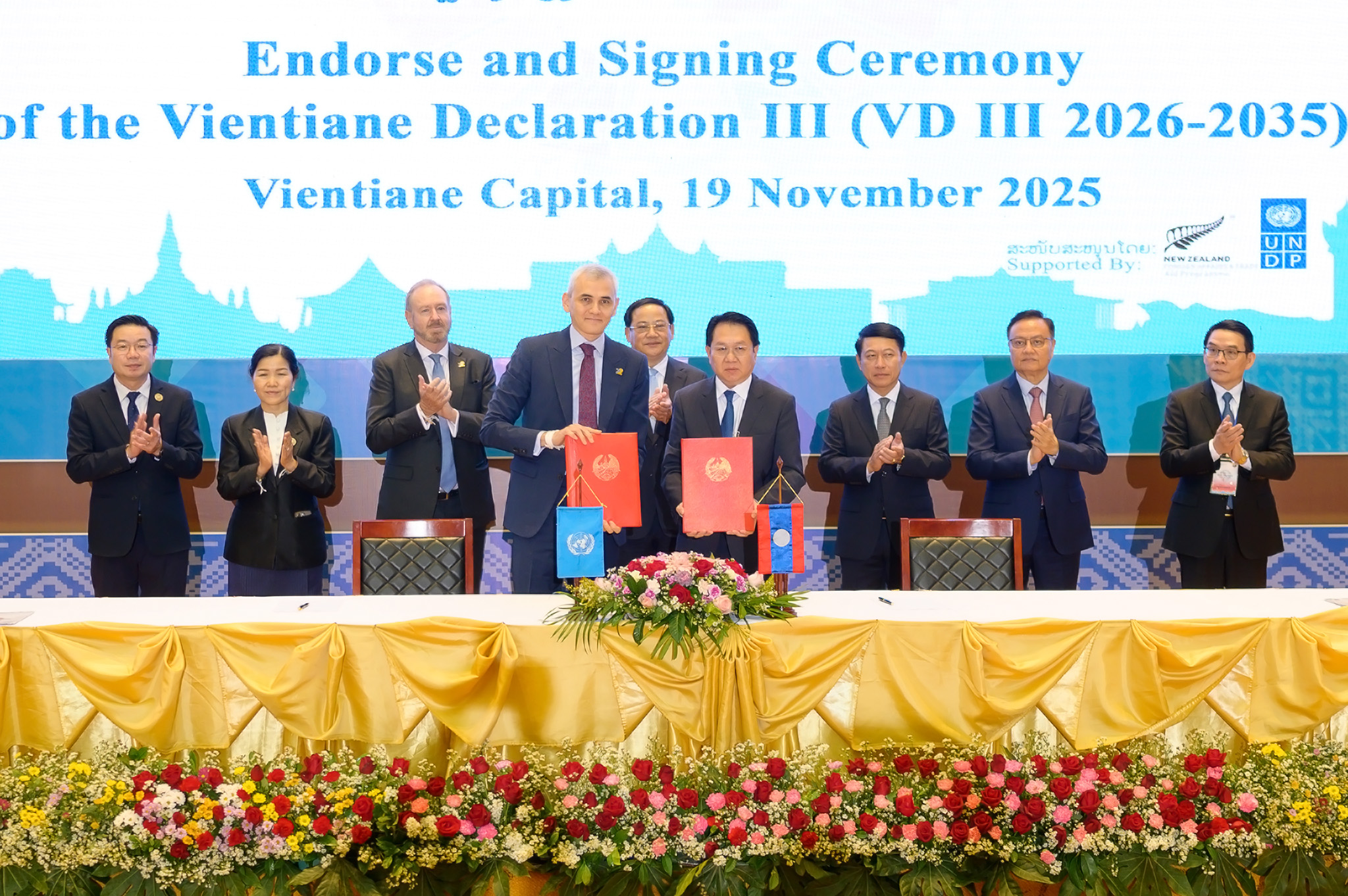
The formulation of the six principles for the Vientiane Declaration III (VD III), intended for the period from 2026 to 2035, is based on a thorough analysis of past experiences, current challenges, and future aspirations within the context of Lao PDR. This process integrates stakeholder feedback, lessons learned from previous declarations, alignment with global frameworks, and a proactive response to emerging challenges, including the dynamics of development finance. The principles for Vientiane Declaration III (VDIII) have been meticulously crafted to align with the Global Partnership for Effective Development Cooperation, ensuring that Lao PDR’s development strategies are relevant both locally and globally. The following outlines the logical and rational justifications for these principles: • Address Emerging Challenges: The principles provide a proactive framework to tackle complex issues including climate change, urbanization, and the shift towards more cooperative development finance models. • Invest in Human Capital: They prioritize education and skills development to build an adaptable workforce capable of driving sustainable economic growth. • Ensure Accountability: The principles emphasize strong implementation, monitoring, and transparency to deliver tangible results and build stakeholder trust.
Principle 1: Country Ownership and Leadership
Principle 2: Quality and Inclusive Partnerships
Principle 3: Results-Based Planning and Implementation
Principle 4: Transparency and Mutual Accountability
Principle 5: Predictability and Harmonization
Principle 6: Capacity Development for Sustainability
Documentation:
The documents are available for download at: