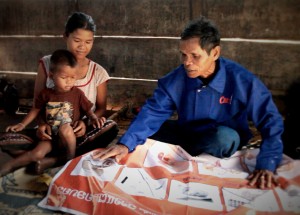
The Government has helped boost family planning across the country, including in remote areas through training community based distributors of reproductive health care kit.
The Minister of Health chairs the Health Sector Working Group. Japanese Ambassador to Lao PDR and the World Health Organization Representative to Lao PDR are Co-Chairs.
The key outcomes and output indicators have shown good progress as follows:
- Achieve universal health coverage (UHC) by 2025 and health-related Sustainable Development Goals (SDGs) by 2030
- The National Health Insurance coverage has reached 94.5% of the population.
- Management of infectious diseases has improved, and the health sector has effectively controlled the spread of epidemics.
- October 2023 WHO’s announcement of Lao PDR’s elimination of Lymphatic Filariasis, and anticipated elimination of schistosomiasis by 2030.
- Malaria cases have plummeted in Lao PDR, from 46 141 cases in 2012, to less than 1200 in 2023, in part due to innovative accelerator strategies.
- Maternal and reproductive health has improved drastically.
- From 2000 to 2020, a March 2023 joint UN report estimates that the number of pregnant women who died per 100 000 live births dropped from 579 in 2000, to 126 in 2020 – a reduction of 78.7% – one of the fastest falling rates in the world.
- Develop competent and qualified human resources for health to improve the quality of health services
- The health sector endorsed the Human Resources for Health (HRH) Development Strategy by 2030 in alignment with the National Human Resources Development Strategy by the Ministry of Education and Sports to strengthen competent and motivated HRH.
- A total of 7,948 health professionals, including all existing medical doctors (3,662), dentists (895), nurses (2,799), and midwives (592) working in both private and public health facilities (including military and police hospitals), have been licensed and registered in 2023.
- Achieve the national targets of 11 core health indicators approved by the National Assembly
- Together with the improvement of health services, the health sector focuses on the achievement of 11 indicators approved by the National Assembly as well as the acceleration of the achievement of SDG targets by 2030 in collaboration with relevant sectors at the central and sub-national levels, neighboring countries and development partners to raise funding and improve technical support for the implementation of health sector priorities.
- According to the efforts in the implementation of the health sector priorities, it is observed that 8 indicators have been achieved in 2023.
Vision and Priorities
The Health Sector Reform Strategy (HSRS) 2021-2030 sets out a vision, “Health for all by all”. According to this vision, all sectors and the entire society must support, contribute to, and be responsible for health, so that Lao people as a whole have good health in accordance with the concept and principle of primary health care agreed upon in the Astana Declaration in 2018.
The overall goal of HSRS 2021-2030 is to achieve UHC by 2025 and achieve health-related SDGs by 2030. To achieve these goals, the strategic direction will be strengthening primary health care through the implementation of 3-builds (Sam Sang) and improving the resilient national health system to be well prepared for any public health emergencies and climate change in the future. Furthermore, improving the overall quality and safety of healthcare services, strengthening strategic planning and capacity of human resources for health, and enhancing sustainable health financing have been identified as key priorities to achieve the health goals during 2021-2025.
This comprehensive reform encompasses five priority areas to achieve the sector’s goal and vision:
- Health Service Delivery;
- Human Resources for Health;
- Governance, Management and Coordination;
- Health Financing; and
- Health Information, Planning, Monitoring and Evaluation.
Expected key outcomes of each priority area are:
- Improving the quality of healthcare services, while ensuring access to essential health services (reproductive, maternal, newborn, and child health, nutrition, immunization, communicable and non-communicable diseases, and availability of essential medicines and medical products) and improving the efficiency of service delivery through integration of relevant services across programs; improving referral network and care capacity for emergency services; and prevention, preparedness, and response to public health emergencies, including emerging infectious diseases, based on the International Health Regulations (2005) and the Asia Pacific Health Security Action Framework;
- Strengthening the capacity of human resources for health through the implementation of licensing, registration, medical education reform, and improvement of recruitment, distribution, and incentives;
- Improving health information governance and e-health enterprise architecture to use modern technologies efficiently and effectively, scope and quality of health information system, District Health Information System 2, and use of information for decision making at all levels;
- Ensuring financial protection through adequate and sustainable domestic government financing, accountability for the funds, and strategic purchasing of efficient and high-quality services; and
- Strengthening governance and coordination across pillars and sectors to achieve health sector reform and management capacity at the district level; and private sector regulation and hospital autonomy.
In line with these priority areas in the HSRS (2021-2030), the 9th Health Sector Development Plan (HSDP 2021-2025) has identified priority actions in each of 8 programs, including 49 sub-programs and 133 projects, in the health sector, and set 11 core indicators to be achieved by 2025.
Lessons and Challenges
- Health infrastructure and medical equipment, especially at sub-national level are old, and damaged. The hospital infrastructure of some provincial, district hospitals and health centers does not meet standards. In many hospitals, various types of health equipment are lacking, obsolete, and malfunctioning, which affects the delivery of quality health services. As a result, health services at the primary care level often do not meet the quality standards defined as “5 Goods 1 Satisfaction (5G1S)”.
- The number and distribution of competent human resources for health at the primary care level has been identified as a key challenge to improving the utilization of health care services at the fixed sites and communities’ overall trust in the health system at the primary care level. Strengthening primary health care should be improved to address issues at the grassroots
- Inadequate government budget for the health sector and limited fiscal space for health have been a challenge to improve infrastructure, purchase medicines and medical products, implement the national health insurance scheme, and implement strategic health interventions, and improve the quality of health care and service delivery. Health taxes and the hospital autonomy strategy with accountable mechanisms to protect the poor have been considered to mobilize more domestic resources for health.
- Financial management for timely disbursement and execution has not been effective and efficient. Therefore, the delayed health insurance reimbursement to health facilities has affected service delivery, especially at sub-national levels.
- The management of hospitals and private clinics is not as good as it should be, and there are complaints about the management role of the health sector.
- The coordination of relevant stakeholders and development partners should be improved to align their support with the priorities indicated in the 9th
Other sectors’ support is necessary to:
- Increase shared responsibility for improving health, specifically health promotion and disease prevention, and for maintaining essential health services for entire populations.
- Take a One Health approach to strengthen the resilient health system and society to be well prepared for any future public health emergencies.
- Strengthen good local governance and community engagement through local authorities’ support in community mobilization and sub-national levels’ (provinces and districts) contribution in implementing priority health sector programs.
Support Needed
From the Government:
- Increase the budget for the health sector, at least 9% of the national budget for the health sector, to ensure the implementation of priority areas such as strengthening competent health personnel (as well as the health specialist), improving the health infrastructure, and ensuring the availability of necessary medicines, medical consumables and
- Increase the number of quotas for the health sector in order to provide the quality health services, especially in rural and remote areas.
- Improve the national health insurance system by moving towards a separate budget for the health insurance scheme from the general budget of the health sector (off-budget) and supporting semi-autonomous status with a reserve fund system to ensure faster reimbursement to health facilities and mobilize sufficient budget for the National Health Insurance System.
- Strengthen coordination within the health sector and with other sectors, such as other ministries and private stakeholders, to further mobilize domestic resources for health and accelerate a One Health approach to achieving UHC and ensuring health security in the country.
From Development Partners:
- Support the integrated planning and budgeting mechanism by aligning their priority areas/activities of the health sector programs with the government’s priorities and plans.
- Provide well-coordinated support for strengthening primary health care according to the key strategic direction of the health sector development plan to achieve universal health coverage and other SDGs.
- Evaluate the health system’s readiness and capacity to plan for smooth donor transition and prepare the system for it through a stepwise approach.
- Provide sustainable support for the sector rather than a short-term project in consideration of longer-term outcomes/impact and sustainability of any initiative supported by development partners.
- Continue to provide technical support for the health sector, especially in priority areas (capacity building, medical equipment, and so on).
Sub-Sector Working Groups
The Sector Working Group includes Sub-Sector Working Groups:
- TWG 1: Human Resource for Health
Department of Health Personnel, Ministry of Health
Chair – Department of Health Personnel, Ministry of Health
- TWG 2: Health Financing
Department of Planning and Finance, Ministry of Health
Chair – Department of Planning and Finance, Ministry of Health
- TWG 3: Service Delivery
Department of Healthcare and Rehabilitation, Hygiene and Health Promotion, Communicable Disease Control, and Food and Drug,
Ministry of Health
Chair – Department of Healthcare and Rehabilitation, Ministry of Health
- TWG 4: Governance, Management, and Coordination
Cabinet, Ministry of Health.
Chair – Cabinet, Ministry of Health
- TWG 5: Monitoring and Evaluation
Cabinet, Ministry of Health.
Chair – Cabinet, Ministry of Health
SWG Secretariat Contacts
Ministry of Health:
Dr. Souphaphone Sadettan, Deputy Director General of Cabinet Office, Ministry of Health, e-mail: phone905@yahoo.com, Tel: 020-5551-2063.
Dr. Phetvongsinh Chivorakoun, Deputy Chief of Planning and Budgeting Division, Department of Planning and Finance, Ministry of Health, e-mail: phetvongsinh@yahoo.fr , Tel: 020-5696-2454.
Japan Internaional Cooperation Agency (JICA):
Dr. Shinsuke Miyano, Health Policy Advisor to the Ministry of Health, Lao PDR, email: s-miyano@it.ncgm.go.jp, Tel: 020-5998-9152.
World Health Organization (WHO):
Dr. Yu Lee Park, Coordinator of Health Systems Development Team, WHO Lao PDR Country Office, e-mail: parkyl@who.int, Tel: 020-5550-9882.